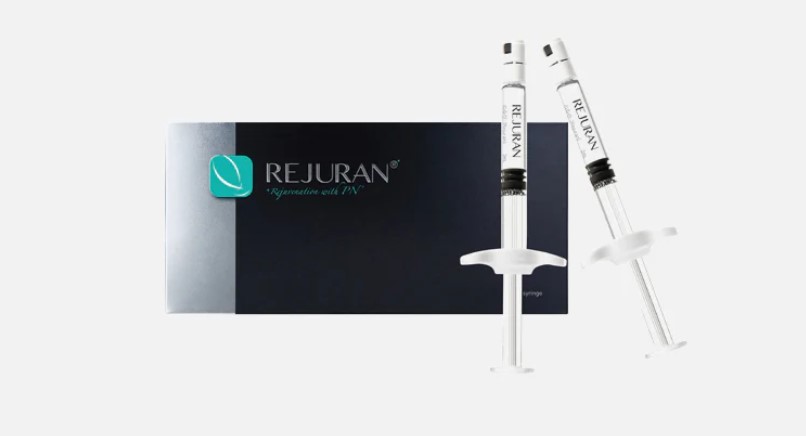
Somewhere between your third skincare TikTok and a deep dive into Korean clinic Instagram accounts, you've probably landed on it: tiny injections, glass-skin results, something about salmon DNA. The treatment is Rejuran Healer—and it's practically a rite of passage at Seoul dermatology clinics.
So why can't you just book it at home? Here's the full picture, from the FDA's reasoning to what a Seoul trip actually costs versus a PRP session in New York.
Why the FDA Still Hasn't Cleared This Injection
In the U.S., PDRN is cleared for topical use only — serums, post-procedure masks. Offer it as an injectable at a U.S. clinic, and that becomes unapproved drug use .
Dr. Mona Gohara, a board-certified dermatologist in Hamden, CT, has noted that "the marketing is moving faster than the science" . The robust, large-scale clinical trial data the FDA requires for injectable biologics simply isn't there yet.
⚠️ No major adverse event signals have emerged in Korean clinical literature — but without FDA review, U.S. patients who seek this treatment carry an informed-consent risk that's genuinely hard to quantify.
For context, the closest FDA-cleared skin booster analogue is Skinvive, approved in May 2023 — an HA micro-droplet injectable targeting cheek skin smoothness for up to six months . It earned that status by navigating the full Class III device pathway, the highest regulatory bar FDA sets for novel injectables, and injectable PDRN hasn't started that process in the U.S. yet.
Seoul vs. Your Derm's Office: A Blunt Price Comparison
Seoul wins. Mid-tier clinics charge $150–$350 per session; three sessions total $450–$1,050 — sometimes less than one US PRP appointment, even after flights.
| Item | PRP (US) | Rejuran (Seoul) |
|---|---|---|
| Per session | $1,000–$2,000 | $150–$350 |
| Full course | $3,000–$6,000 | $450–$1,050 |
| FDA status | Cleared | Not approved |
| Downtime | 2–5 days | 1–3 days |
In the US, PDRN microneedling at Beauty Ranch LA (~$600) is the closest legal swap — no injectable, no Seoul flight required. PRP is FDA-cleared at $1,000–$2,000; Dr. Ava Shamban says it works best for fine lines and sun damage .
Exosome therapy runs $800–$1,500+ with no FDA approval and a 2020 agency warning still on the books . If budget is the deciding factor, book Seoul.
What Your Skin Actually Does (Week by Week)
Numbing cream first; PN into the dermis via micro-needle grid, 30–60 minutes .
Small papules and redness at injection sites; both typically fade within 2–5 days .
A quiet glow starts to surface. Texture softens; pores look tighter.
Collagen remodeling peaks here. Most plans run 3–4 sessions spaced 2–4 weeks apart .
One full course holds 6–12 months; plan a maintenance session every 4–6 months to keep it going.
Board-certified NYC derm Dr. Yunyoung Claire Chang keeps her take measured: "I've tried it and liked it. I think it helped with texture and tone" .
Your Realistic Options If Seoul Isn't Happening Right Now
Topical PDRN serums are your most accessible stateside option. They work best applied right after microneedling — though the effect ceiling is lower than injectable .
Skinvive (FDA-approved 2023) is the only cleared injectable skin booster in the US — HA-based, targeting glow and hydration, not PDRN's DNA-repair pathway . PRP runs $1,000–$2,000 a session with a solid autologous safety record; results vary by individual biology .
💡 If a US clinic advertises "injectable Rejuran Healer," ask exactly which formulation and regulatory framework — off-label injectables require explicit informed consent and a licensed MD .
The PDRN injectable category is under active clinical study. The US regulatory picture could shift meaningfully within 2–3 years as more data accumulates.
Generally yes — if you vet the clinic. Seoul's top aesthetic practices are staffed by board-certified dermatologists and plastic surgeons who've been administering Rejuran for well over a decade, which means the clinical experience here runs circles around anything you'd find stateside. Budget $300–$500 per session at a reputable mid-tier clinic and plan for 2–5 days of downtime: think redness and tiny injection bumps that fade fast . The treatment isn't FDA-approved, so you're stepping outside the US regulatory safety net — that's a personal risk calculation worth making with eyes open. Non-negotiables: confirm the clinic uses authentic Rejuran PN (not a knockoff formulation) and has English-speaking medical coordinators before you put a deposit down.
Technically, no. Injectable PDRN has not received FDA approval in the US, which makes offering it as a stand-alone cosmetic injection legally murky at best . If a med spa tells you they're doing it, ask specifically: which FDA-registered product are they injecting, and under what regulatory pathway? Some clinics are layering topical PDRN onto skin after microneedling — that's legal, but it's a fundamentally different mechanism from the intradermal injections you'd get in Seoul. Topical application can't penetrate the dermis the same way. The needle-in-dermis version? Still a gray-to-red area in the US, and worth serious scrutiny before you say yes.
The standard protocol is 3–4 sessions spaced 2–4 weeks apart, with most patients noticing real improvements in texture, pore size, and glow within 2–4 weeks of starting . A full Seoul course costs roughly $690–$1,155 total at a mid-tier clinic — compare that to $1,200+ for a single session at some US med spas, and the medical-tourism math starts making a lot of sense. Results typically hold for 6–12 months depending on your skin condition, sun exposure, and lifestyle. Most people who stick with it schedule one maintenance session a year, sometimes two, to keep things going. The effects are cumulative, so patience in those first weeks pays off.
Nothing is a perfect swap — let's be honest about that. But Skinvive by Juvederm is your most direct domestic option: FDA-approved in May 2023, it's a hyaluronic acid microinjection designed to improve skin smoothness and hydration from within the dermis, not add volume . Same general idea as Rejuran, different active ingredient. Effects last around 6 months. PRP microneedling is the other credible alternative — costs $1,000–$2,000 per session, has a solid US safety record, and uses your own platelet growth factors to drive skin repair. Neither one replicates Rejuran's specific salmon-DNA cellular regeneration pathway, but both come with FDA backing and real clinical data. Worth discussing with a board-certified derm before you book flights.